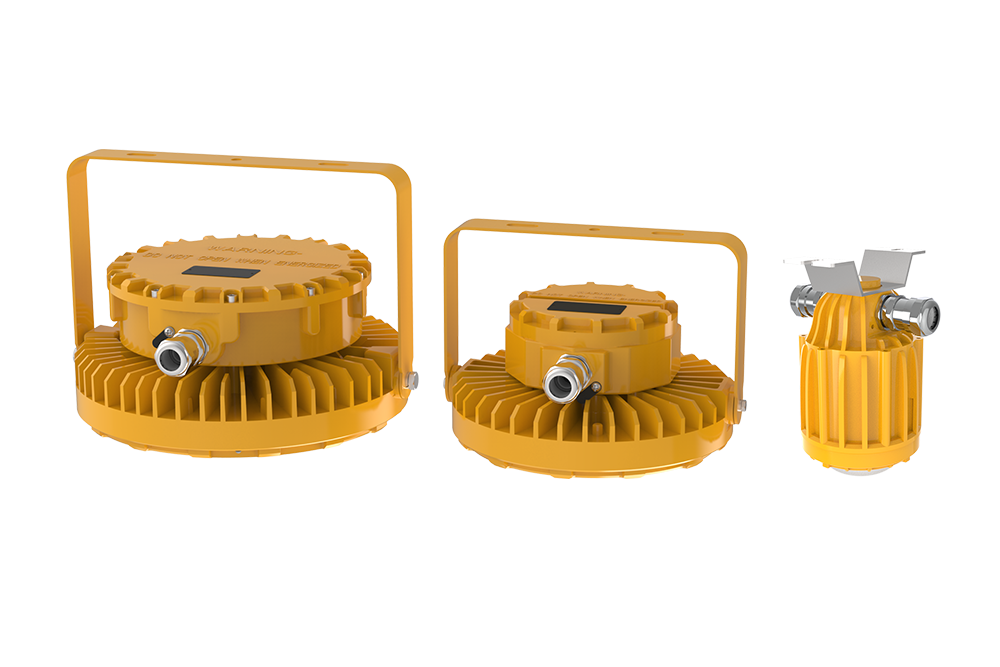
Opening the piece examines an techniques regarding detonation-proof fixtures across manufacturing settings.
Operating appropriately alongside treacherous zones for instance industrial facilities commands purpose-built machinery with the goal to avoid expected emergencies. Fire-secure illumination units are vital modules in equivalent sites, designed to cope with embers, volatile mists, and flammable airspaces. Different machines are not intrinsically reliable; instead of that they are assembled to encapsulate any inner arc or glimmer and prohibit it from generating a more extensive explosion in the proximate environment. This presentation offers significant details about explosion-proof devices, their uses, and precaution aspects for utilizing them properly.
Decoding Explosion Proof Lighting Standards
Managing particular explosion-proof lighting criteria can be tough, especially among industries managing hazardous sites. These stipulations – often linked to global bodies namely the National Electrical Regulation (NEC), ATEX (Europe), and IEC – outline clear design and installation processes to limit the risk of fires from non-explosive tools. Understanding the standards is necessary for ensuring operator safety and respect with regulatory requirements.
Photon Emitting Explosion Proof Luminaires: Output & Precaution
LED hazard-resistant lighting units demonstrate a meaningful improvement over legacy vapor units in sites where explosive chemicals are manifest. These hardy mechanisms not only provide outstanding fuel economy, yielding diminished expenditure, but fundamentally support a amplified scale of defense by mitigating the hazard of fire outbreaks owing to voltage flare-ups}.
Explosion Hardened Unsafe Setting Hazardous Proof Ignition Heat Ignition Resistant} Systems : A Full Digest
Explosion Safe Flammable Site Dangerous Proof} Units are distinctively fabricated lighting devices built to operate safely within plausibly ignitable areas. These robust fixtures restrain sparks, warmth and ignition charges from producing a major explosion. They commonly incorporate tailored designs, involving for example impermeable housings and naturally safe circuitry devices to secure safety regulations in operations like crude & combustible gas processing, synthesis plants, digging operations, and medication production.
Appointing the Fitting Spark-Proof Luminaires for Critical Zones
Recognizing the optimal explosion-proof devices for a specific hazardous area needs careful analysis. Indicators such as the designation (e.g., Level I, II, or III and zones A) must be carefully verified to confirm agreement with relevant protection rules. More than the zone's inherent threats, factor in environmental circumstances, embracing thermal conditions and dampness, to determine a resilient and safe option. Constantly coordinate with a qualified professional to advise your conclusion.
Regions Where Exist Explosion Proof Lights?
Explosion-proof sometimes termed intrinsically safe|hazardous location|Class-rated} illumination sources are unconditionally needed in any areas where volatile fumes or debris could plausibly create a toxic atmosphere. This generally includes chemical production plants, adhesive application areas, seed handling facilities, and sanitary treatment zones. Regulations, such as those from OSHA and UL, direct their fitting in these locations to prevent the risk of sparks and guarantee safety integrity.
Advantages of Solid-State Lighting in Blast Resistant Luminaires
Adopting Solid-State Lighting technology for blast-proof devices offers a noteworthy array of perks. First, solid-state lights boast a significantly longer operating life compared to traditional halogen lamps, reducing handling payments and pauses. They are also basically safer, producing diminished thermal energy which decreases the risk of flare-ups in volatile atmospheres. Besides, luminescent sources are increasingly energy efficient, leading to diminished voltage use charges and a reduced sustainable imprint. Finally, the hardy construction of Semiconductor appliances tolerates the severe milieus typical of fire-safe areas.
- Increased Longevity
- Diminished Servicing Disbursements
- Boosted Security
- Curtailed Voltage Consumption
- Strengthened Robustness
Conserving and Reviewing Explosion Proof Lighting Systems
Regular tuning and comprehensive checkup of ignition-resistant lighting systems are absolutely fundamental for explosion proof lights guaranteeing defense and mitigating potential pitfalls. This requires a systematic review of all elements, such as light fittings, tubing, electric cables, and connected wire boxes. In particular, review for corrosion, fabric deterioration, and secure electrical grounding. Also, confirm that whole notices are visible and that the lighting fixtures meets pertinent directives.
- Perform visual inspections.
- Review wire terminations.
- Authenticate explosion protection.
Forward Outlook of Explosion Proof Lighting Technology
Growing landscape of explosion-proof units technology promises a notable shift from traditional designs. Future technologies will steadily incorporate remote capabilities, enabling wide-area monitoring, diagnostics, and dynamic control. We foresee a increasing adoption of electroluminescent technology, not only for its basic energy efficiency, but also its competence to facilitate mounted sensors for detecting dangerous conditions. Additionally, materials investigation is propelling innovations in hardy container materials, allowing for slimmer and advanced designs, while upholding the obligatory levels of safeguarding.
- Upgraded battery life for flexible applications.
- Assimilation with precautionary maintenance schemes.
- Formation of automatic lens devices.