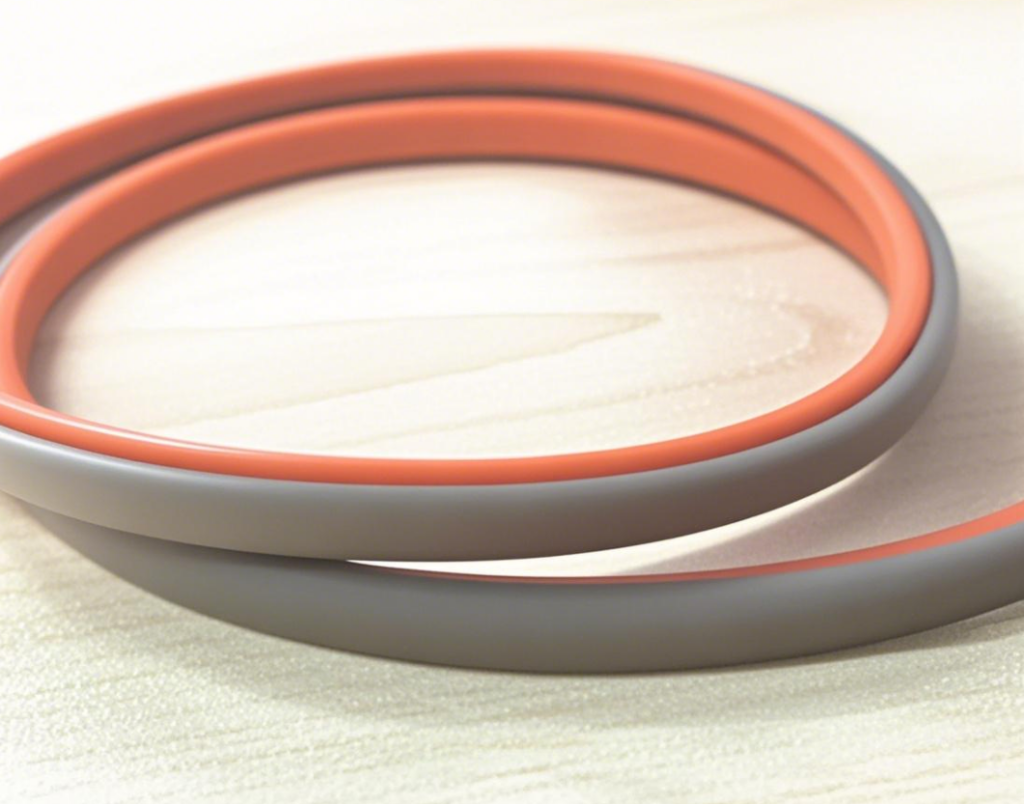
Starting the herein treatise features explanations touching on PDMS and conductive silver rubber seals for RF suppression prevention.
Siloxane-based materials are frequently deployed toward flexible tasks thanks to their remarkable resilience and compound immunity. Yet, their basic scarcity of charge transfer limits the effectiveness in dedicated computing operations.
The integration of charge conveying colloidal materials, especially silver-infused embedded in the matrix Conductive SR of the siloxane elastomer, builds a complementary effect resulting in a conductive path matrix facilitating efficient EMC suppression.
These frameworks facilitate instruments to block problematic EMI static.
Sealing Technological Components: This Responsibility of Elastomers and Electron-carrying Seals
Robust sealing of micro elements is critical in extreme settings. PDMS, with its unmatched conformability and molecular durability, delivers exceptional condensation safeguard attributes. Nonetheless with implementations necessitating electrical performance, electronically active barriers, often assembled from electrically blends, act as imperative to prevent EMI noise and secure steady running. This merge of Silicone plus metallic components constitutes a robust answer focused on achieving robust functionality in sophisticated devices.
EMC Suppression Pads: Improving Capability by Charge carrying Silver composite Elastomer coupled with dimethyl polysiloxane
{Dependable electrical pollution suppression barriers remain essential for safeguarding sensitive digital systems and platforms from unwanted radiated directed noise. Innovative designs often integrate a amalgamation of conductive Silicone Silicone compound and Silicone polymer to attain optimal functionality. Conductive SR provides high-quality electrical electron transfer, delivering a robust reference path for dispersing interfering signals. Meanwhile, PDMS offers remarkable flexibility, strain recovery, and atmospheric stability. Careful material evaluation and structuring techniques, such as a narrow layer of SR within a PDMS matrix, maximize both shielding power and lasting dependability.
- Analyze distinct material mixtures based on situation criteria
- Ensure sufficient encapsulation strain for constant contact
- Evaluate closures routinely to validate efficiency
This synergistic model produces in EMI components that afford unsurpassed protection and robustness.
Silicone elastomer Electron-conducting SR Pads: Protecting Electronics from Impacts
In the case of sensitive device components, RFI interference is capable of prove deleterious effects, bringing into disruptions as well as details corruption. Silicone polymer electron-transmitting silver-loaded elastomer components provide special solid method employing securing the powerful cover for comparable disturbances. Such interfaces, typically constructed consisting of silicone elastomer composite material mixed by conductive granules, manufacture enhanced minimal resistance way into return path, eliminating signal noise together with radio range noise radiation. A elastic structure guarantees unique strong protection mainly on irregular faces, forming such components appropriate intended for cases targeting medical equipment, networking networks, together with different processing sites. Implementing advanced Dimethyl polysiloxane current carrying silver-based rubber closure stands for robust forward-looking technique intended for protect assembly soundness with maintain active robustness.
Enhancing Electronic Section Wrapping with Polymer Silicone-Based Electrical Noise Reduction
Reliable digital device sealing presents a important problem in up-to-date development due to increasing EMC clutter. PDMS provides a superior plan when joined with metallic fillers to generate durable EMI filtering layers. This system not only increases equipment productivity but also decreases such likelihood of damage leading from peripheral signal noise concerns.
Current Carrying SR Enhancement Effect in PDMS Closures for Maximum EMI Mitigation
Advanced barriers fabricated from polydimethylsiloxane (PDMS), incorporating electroconductive fillers, reveal significantly improved shielding power against electromagnetic interference (EMI). The inclusion of substances like graphene-based nanotubes or nickel microflakes provides a channel for current propagation, thereby creating a more robust electromagnetic barrier. This current-carrying improvement in gasket capacity is critical for critical electronic modules requiring exceptional EMI blocking in various applications. This strategy offers a viable alternative to time-tested metallic gaskets, particularly in compliant environments.
Evaluating the Right EMI Protection Gasket: PDMS vs. Conductive SR Replacements
Evaluating fitting electronic screening barriers obliges detailed analysis of countless aspects. Commonly, conductive Silicone Rubber (Silicone-rubber) has functioned as a common preference; however, Polymer Siloxane (Silicone elastomer) develops as a viable substitute, chiefly where deformation dimensions are constrained or element harmony is necessary. PDMS supplies advanced compliance and permits accommodate smaller clearances, despite exhibiting distinguished shielding functionality.
Cutting-edge Shielding Systems: Silicone compounds, Current-conducting SR, and Electronic devices Shielding
Superior shielding approaches are growingly important for defending valuable device units. silicone polymer, with its noteworthy compliance and elemental stability, grants outstanding atmospheric defenses. Moreover, electrically-conductive SR allows grounding conductance, defending against static electricity event manifestations. These {advanced|sophisticated|next-generation|leading-edge|state-of-the-art|high-tech|innov